

了解耳鼻喉科医生的角色:新加坡专科医生就诊指南
当涉及耳鼻喉科(ENT)问题时,寻求专业医疗护理至关重要。 耳鼻喉科医生又称耳鼻喉科医师,是训练有素的医学专业人员,专门诊断和治疗与耳朵、鼻子和喉咙有关的疾病。

2023 年 6 月 26 日更新–由 DENNIS CHUA 博士审阅DENNIS CHUA
在这篇博文中,我们将深入探讨耳鼻喉科医生的角色、耳鼻喉科医生治疗的常见耳鼻喉疾病、何时去看耳鼻喉科医生、在新加坡看耳鼻喉科时需要注意什么,以及如何根据您的需要选择合适的专科医生。
什么是耳鼻喉科医生?
耳鼻喉科医生受过专业培训,能够诊断和治疗影响耳朵、鼻子和喉咙的各种疾病。 以下是一些常见的耳鼻喉科疾病:
Common ENT-Related Causes
The inner ear plays a key role in maintaining balance and spatial awareness. When this system is disrupted, vertigo can occur. Below are some of the more commonly encountered inner ear–related conditions that may contribute to vertigo symptoms.
1. BPPV: The Most Common Culprit
Benign Paroxysmal Positional Vertigo (BPPV) is one of the most common causes of vertigo. Tiny calcium carbonate crystals are naturally present in the inner ear and help the body sense movement and position. In BPPV, these crystals can become displaced. When this happens, the inner ear sends incorrect signals to the brain, leading to the sensation of spinning or movement.
BPPV can hit you out of nowhere. One minute you feel fine, and then you tilt your head or flip over in bed. Suddenly, everything’s spinning. Most episodes last between 30 and 60 seconds.
Specific movements tend to set it off. You’ll notice it happens when you:
- Look up
- Bend down to grab something
- Turn over while you’re sleeping
- Get in or out of bed
- Lean your head back
2. Meniere's Disease
Ménière’s disease is a disorder of the inner ear and is associated with an abnormal buildup of fluid within the inner ear. This fluid imbalance can interfere with both balance and hearing function.
The condition is commonly associated with the following symptoms:
- Vertigo episodes lasting from 20 minutes to several hours
- Hearing that may change from time to time
- Ringing or buzzing sounds in the ear
- A feeling of pressure or fullness in the ear
3. Vestibular Neuritis and Labyrinthitis
Vestibular neuritis and labyrinthitis are conditions that involve inflammation affecting the inner ear or the nerves connected to it. In vestibular neuritis, the inflammation primarily affects the vestibular nerve, which carries balance signals from the inner ear to the brain. Labyrinthitis involves inflammation of both the balance and hearing structures of the inner ear.
These conditions are often thought to be related to viral or post-viral inflammation, although the exact cause is not always clear. Symptoms typically come on suddenly and may include intense vertigo, nausea, and vomiting. Some people describe waking up with severe spinning sensations that make movement difficult.
Vestibular neuritis mainly affects balance and does not usually cause hearing changes. In contrast, labyrinthitis can affect both balance and hearing, leading to symptoms such as ringing in the ear or reduced hearing alongside vertigo.
The most severe vertigo often occurs in the early phase and may last for several days. While the spinning sensation usually improves, a feeling of imbalance or unsteadiness can persist for weeks or, in some cases, longer as the brain gradually adapts.
Warning Signs That Need Immediate Attention
Most vertigo episodes are not emergencies, but certain symptoms require urgent medical attention, as they may indicate a more serious condition.
Call for emergency help if any of these occur with your vertigo:
- A sudden, severe headache
- Double vision or sudden changes in vision
- Difficulty speaking or slurred speech
- Weakness or numbness in the arms or legs
- Loss of consciousness or near-fainting
- A high fever, especially with other neurological symptoms
- Chest pain or an irregular heartbeat
Lifestyle Adjustments
Daily habits can play a supportive role alongside medical treatment. Depending on the underlying cause of vertigo, your doctor may recommend certain lifestyle adjustments, such as:
- Reducing salt intake if you have Ménière’s disease, as this may help manage inner ear fluid balance
- Staying well hydrated throughout the day
- Getting regular, good-quality sleep
- Avoiding sudden or rapid head movements when possible
In some cases, additional treatments may be needed. Your ENT specialist will discuss appropriate options and tailor a management plan based on your specific condition.
Living With Vertigo
Treatment often takes time to have its full effect. In the meantime, practical strategies can help you manage symptoms and reduce the risk of falls.
Move slowly when changing positions. Sitting briefly at the edge of the bed before standing and pausing after getting up from a chair can help reduce sudden imbalance. Quick or abrupt movements may trigger symptoms for some people.
Simple changes at home can also improve safety:
- Secure or remove loose rugs
- Install grab bars in the bathroom or shower if needed
- Use nightlights for better visibility at night
- Keep walkways clear of clutter and cords
Daily Habits That May Help
Maintaining good hydration is important, as dehydration can worsen dizziness. Limiting caffeine and alcohol may also be helpful, as both can affect the balance system in some individuals.
Keeping a symptom diary can provide useful insights. Recording when episodes occur, how long they last, and possible triggers can help your doctor adjust your management plan more effectively.
Stress can sometimes worsen vertigo symptoms. Simple relaxation techniques, such as deep breathing or gentle exercise, may help when tolerated.
Finding the Right Care Path
Vertigo can affect daily life in ways that are not always visible to others. Ongoing spinning sensations, nausea, and balance difficulties can be distressing and deserve proper evaluation.
ENT specialists are trained to assess conditions affecting the inner ear and balance system. With an accurate diagnosis, many causes of vertigo can be effectively managed, allowing symptoms to improve over time.
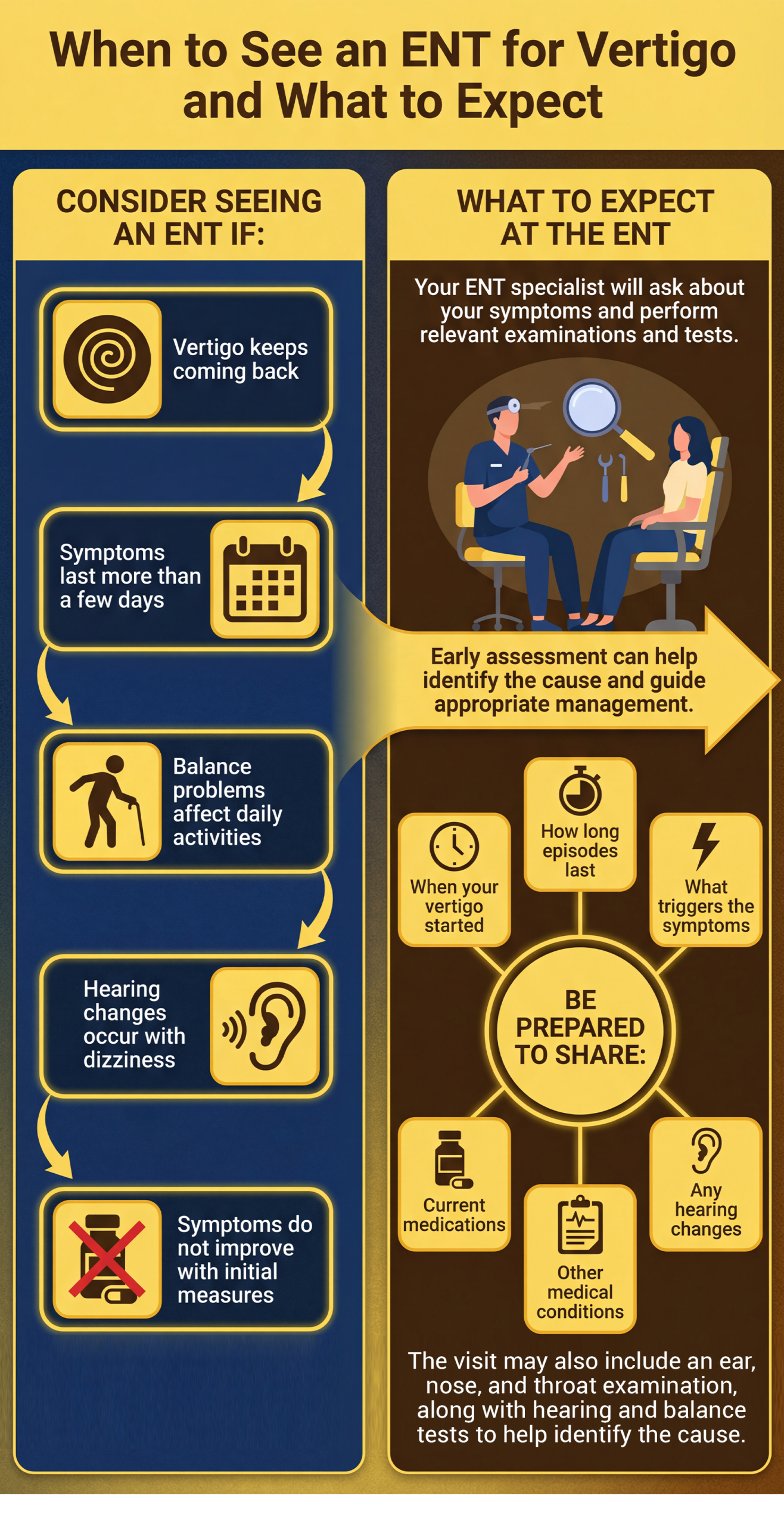
If dizziness or vertigo keeps returning, seeking timely medical advice can help clarify the cause and guide appropriate care.
Book an appointment with Dr Dennis Chua to learn about your options for managing vertigo symptoms.
如果您对自己的耳朵、鼻子和喉咙有疑问或担心,请联系我们、
您可以向新加坡耳鼻喉科专家 Dennis Chua 医生预约咨询。
他在当地完成了耳鼻喉科培训,并获得了国际资格证书。

About Dr Dennis Chua
Dr. Dennis Chua is an Ear, Nose and Throat (ENT) specialist with more than a decade of experience. He is held in high regard within the field of Otolaryngology, having published many articles in peer reviewed journals on the topic of ENT.
As an ENT Specialist in Singapore, Dr Dennis Chua is committed to providing thorough, patient-centred care for both adults and children. Whether you’re managing allergies, sinus problems, hearing issues, or throat concerns, we take time to understand your condition and guide you through your treatment options.