

Is Your Loud Snoring A Sign of Something More Serious? What It May Reveal About Sleep Apnoea
Loud or persistent snoring may be more than a nighttime annoyance. Some cases may point to a condition known as Obstructive Sleep Apnoea (OSA). In Singapore, sleep apnoea is more common than many may realise.
A population-based study reported that 30.5% of adults had moderate-to-severe obstructive sleep apnoea, and 91% of these cases were previously undiagnosed.
In this article, we will explore how snoring occurs, what it may indicate about sleep apnoea, and when an ENT specialist’s evaluation may be helpful.
Key Takeaways
- A Singapore study estimated moderate-to-severe sleep-disordered breathing in 30.5% of adults, with 91% previously undiagnosed.
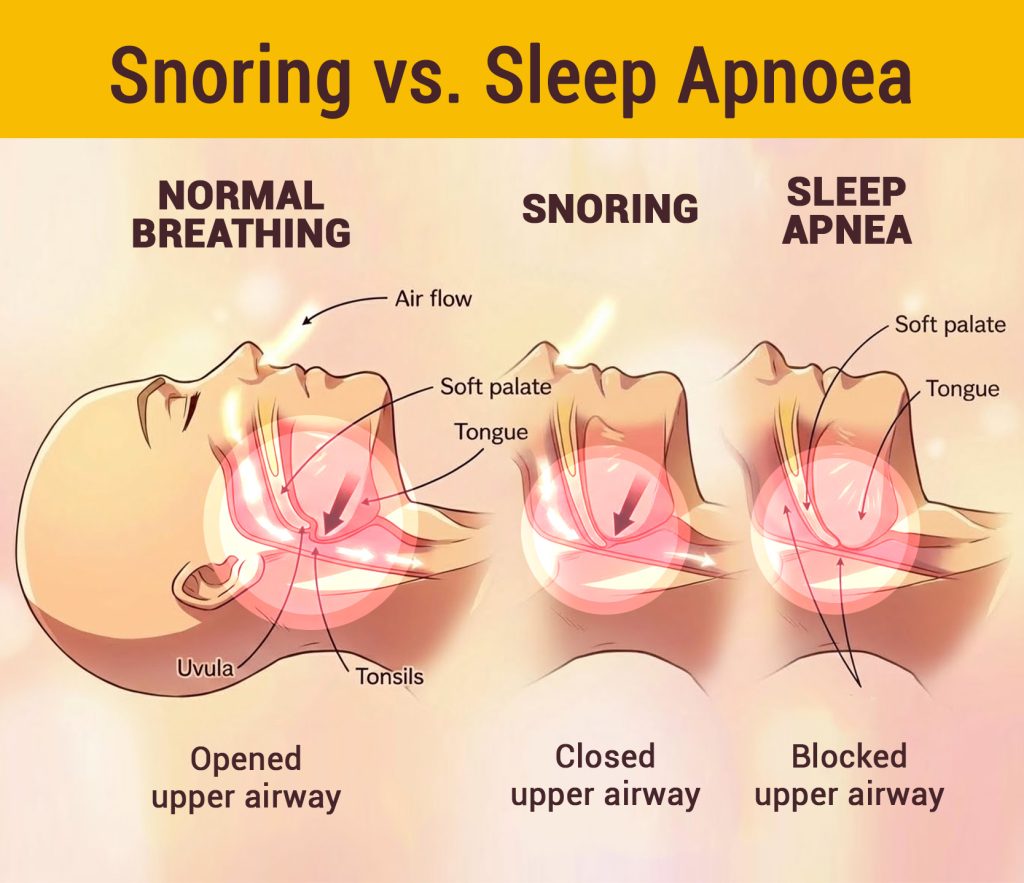
- Snoring happens when airflow makes soft tissues like the soft palate, uvula, tonsils or tongue base vibrate during sleep.
- Contributing factors include nasal congestion, enlarged tonsils, higher body weight, back sleeping, alcohol and age.
- Snoring paired with witnessed breathing pauses, gasping, morning headaches or daytime sleepiness may signal obstructive sleep apnoea.
- A sleep study measures breathing events and other body signals to diagnose and assess sleep apnoea.
What Exactly Causes Snoring?
TSnoring happens when airflow through the upper airway during sleep causes the soft tissues—such as the soft palate, uvula, tonsils or tongue base—to vibrate. These vibrations create the familiar snoring sound that can range from soft to loud.
Common contributing factors include:
- Nasal congestion, which restricts airflow through the nose
- Enlarged tonsils or adenoids, especially in children or younger adults
- Excess soft tissue, often linked to higher body weight
- Sleep posture, particularly sleeping flat on the back
- Alcohol use before bed, which relaxes throat muscles
- Age-related reduction in airway muscle tone
How Singapore’s Environment Can Affect Snoring

Recognising the Link Between Snoring and OSA
Snoring and obstructive sleep apnoea (OSA) both involve increased resistance in the upper airway. This is why snoring can sometimes be associated with airway narrowing that contributes to sleep apnoea.
OSA is a sleep-disordered breathing condition characterised by repeated episodes of partial or complete upper-airway obstruction, leading to reduced airflow (hypopnoea) or pauses in breathing (apnoea). These events cause drops in oxygen levels and repeated awakenings, resulting in fragmented, unrefreshing sleep.
Common signs include:
- Loud, habitual snoring
- Witnessed pauses in breathing or gasping at night
- Morning headaches or dry mouth
- Daytime sleepiness or difficulty concentrating
A sleep study (polysomnography) confirms OSA by calculating the Apnoea–Hypopnoea Index (AHI), which reflects how many breathing interruptions occur per hour.
Lower AHI scores suggest milder obstruction, whereas higher scores indicate more frequent events and more severe sleep apnoea.
What Snoring Patterns Can Tell Us About OSA Severity
While not everyone who snores has obstructive sleep apnoea, the pattern, loudness and frequency of snoring can reveal valuable clues. Research suggests that not just snoring itself, but how a person snores, may provide important clues about airway obstruction.
Snoring Intensity and OSA Severity
Snoring Patterns and Airway Collapse
More recent evidence from a review of 13 studies analysing snoring acoustics found that the characteristics of snoring — including loudness, pitch and how the sounds vary over time — can differ across individuals with varying levels of OSA severity.
For example, snoring in individuals with milder obstruction, often reflected by lower AHI scores, tended to sound more consistent, with fewer shifts in pitch or rhythm. In contrast, snoring in individuals with greater airway collapse showed higher-pitched sounds and more irregular patterns, which were linked to higher AHI scores and more severe sleep apnoea.
These observations highlight that snoring can sometimes reflect the extent of airway narrowing—especially when paired with symptoms such as tiredness, morning headaches or nighttime gasping.
If you or your partner notice consistent, loud or erratic snoring, it may be worth discussing these symptoms with an ENT specialist in Singapore for further evaluation.
To learn more about sleep apnoea, you may schedule a consultation with Dr Dennis Chua.
Treatment and Management Approaches
1. Medical Management
Initial management aims to improve airflow and reduce congestion or obstruction. Options may include:
- Nasal saline irrigation to clear congestion
- Intranasal corticosteroid sprays to relieve inflammation
- Antihistamines for allergy-related symptoms
- Short-term decongestants for acute nasal swelling
These measures can support smoother nasal breathing and reduce snoring caused by congestion.
For patients diagnosed with OSA, Continuous Positive Airway Pressure (CPAP) therapy may be recommended. CPAP keeps the airway open by delivering a steady flow of air through a mask during sleep.
2. Surgical Intervention
When medical therapy is insufficient or anatomical blockages are identified—such as enlarged tonsils, deviated septum, or palate collapse—surgery may be considered.
Common procedures include:
- Nasal or sinus surgery to relieve structural obstruction
- Tonsillectomy or adenoidectomy for enlarged tissue
- Palatal or tongue-base procedures to improve airway stability
Each plan is tailored to the patient’s condition, anatomy and overall health, aiming to restore smoother airflow and better sleep quality.
3. Lifestyle and Environmental Factors
Simple daily changes can complement medical or surgical management:
- Maintain a healthy weight to reduce throat tissue collapse
- Avoid alcohol and sedatives before bedtime
- Practise good sleep hygiene, such as consistent sleep times and reduced screen exposure
- Manage allergies and environmental triggers that cause nasal congestion
These measures can improve airflow and promote more restful sleep.
When Should You See an ENT Specialist
While not all snoring indicates sleep apnoea, a clinical assessment can help clarify whether airway obstruction or related factors may be involved. An ENT (Ear, Nose, and Throat) specialist in Singapore can determine whether nasal, throat or structural issues are contributing to the symptoms and whether further investigation is needed.
If you experience persistent snoring that affects your rest or your partner’s, or if sleep quality has declined despite adequate hours of sleep, an ENT evaluation may provide useful guidance on the next steps for management.
Have questions or concerns about your ears, nose and throat? Book a consultation with Dr Dennis Chua today.
If you have questions or concerns about your ears, nose, and throat,
you may book a consultation with Dr Dennis Chua, an ENT specialist in Singapore.
He has completed his training in otorhinolaryngology locally and attained qualifications internationally.

About Dr Dennis Chua
Dr. Dennis Chua is an Ear, Nose and Throat (ENT) specialist with more than a decade of experience. He is held in high regard within the field of Otolaryngology, having published many articles in peer reviewed journals on the topic of ENT.
As an ENT Specialist in Singapore, Dr Dennis Chua is committed to providing thorough, patient-centred care for both adults and children. Whether you’re managing allergies, sinus problems, hearing issues, or throat concerns, we take time to understand your condition and guide you through your treatment options.
Explore More Topics

Nasendoscopy in Singapore: Cost, Procedure & What to Expect
Nasendoscopy in Singapore: What It Is, What to Expect, and Cost Nasendoscopy at a Glance…

Ear Wax Removal in Singapore: Methods, Cost, and When to See an ENT
Ear Wax Removal in Singapore: Methods, Cost, and When to See an ENT Learn about…

Tinnitus and Blocked Ears: Causes, Treatment, and When to See a Specialist
Tinnitus and Blocked Ears: Causes, Treatment, and When to See a Specialist Learn more about…